Welcome to the new ebulletin for the Faculty
For information published before 29 April 2014, please see the old ebulletin
New submissions can be sent to ebulletin@monash.edu
Showing posts with label Prof Robyn O'Hehir. Show all posts

Wednesday, 9 September 2015

Anaphylactic allergic reaction develops after sensitisation from skin care product

L-R: Dr Sara Prickett, Prof Robyn O'Hehir and Prof Jenny
Rolland.


Goat milk first, now oats are revealed by Monash allergy researchers to be allergenic ingredients in skin care products.

"Food is meant to be eaten, not rubbed into inflamed skin," said Professor Robyn O'Hehir, Director of Allergy, Immunology and Respiratory Medicine at The Alfred and Monash University, on publication of her article in 2014 which demonstrated both clinical and laboratory evidence of a link between topical application of cosmetics and the development of food allergy to goat's milk.

Prof O'Hehir and her group have recently published another case study, this time on a woman who used creams and products containing oatmeal, and who experienced a life-threatening allergic reaction on eating oat-containing food.  The study was published in The Journal of Allergy and Clinical Immunology: In Practice.

Professor Robyn O'Hehir said many creams – even for the treatment of dry skin or eczema – are advertised as ‘natural’ products.

“Surprisingly, some of these products contain foods which are known to cause allergy,” Prof O’Hehir said. “Goat’s milk, cow’s milk, nut oils and oats are common ingredients in ‘natural’ cosmetics. While unlikely to be a problem for most people, repeated application of these to broken or eczematous skin may lead to a severe allergic reaction when the food is next eaten. Our 2014 study was the first to demonstrate both clinical and laboratory evidence of a link between topical application of cosmetics and the development of food allergy. This new study adds extra evidence to the argument for skin care preparations to be bland and to avoid agents capable of sensitisation, especially foods.”

Reference: Radhakrishna N, Prickett S, Phan T, Rolland JM, Puy R, O'Hehir RE. Anaphylaxis to oats after cutaneous sensitization by oatmeal in skin products used for the treatment of atopic dermatitis. J Allergy Clin Immunol Pract. 2015 Aug 14. pii: S2213-2198(15)00386-4. doi: 10.1016/j.jaip.2015.07.005. [Epub ahead of print, 1st page pdf only available]

Wednesday, 2 September 2015

Professor Robyn O'Hehir: InSPIREd Therapy for Allergies (Synthetic Peptide Immuno-Regulator Epitopes). Find out more on 30 Sep 2015


A key scientist in international allergy research for over 25 years, Professor Robyn O’Hehir is an academic clinician-scientist who successfully combines a strong basic research record with a continuing commitment to clinical medicine at a senior level. She is Professor and Director of Allergy, Immunology and Respiratory Medicine at the Central Clinical School, Monash University, and The Alfred hospital. Professor O'Hehir will be speaking at the forthcoming 30 Sept Translational Research symposium hosted by Central Clinical School. See detail below.

She graduated BSc and then MBBS (Hons) from Monash University and completed her clinical postgraduate training at Royal Brompton Hospital, University of London, specialising in both Clinical Immunology/Allergy and Respiratory Medicine.

Professor O’Hehir has a sustained record of success in competitive grant funding, including Wellcome Trust and NHMRC, and was Monash Director of the Co-operative Research Centre for Asthma and Airways for 12 years. She has more than 235 publications, including three books and 16 patents. 

Professor O’Hehir’s research culminated in demonstration of CD4+ T cell anergy induction by high dose CD4+ T-cell epitope peptides, focusing initially on house dust mite allergens. Her approach of using dominant T cell epitope peptides for hypoallergenic allergen-specific immunotherapy was developed by Imperial College London spinout company Circassia® with successful phase 3 trials for cat allergy. Recently house dust mite data generated by Professor O’Hehir during her Wellcome Trust postdoctoral research, and grass pollen IP generated by her Monash Allergy Team (O’Hehir and Rolland) and assigned to Circassia®, successfully completed phase 2 clinical trials for house dust mite and grass pollen allergy. 

Professor O’Hehir’s Team has now identified the critical sequences of peptides of the two major peanut proteins that interact with T cells and build immunological tolerance, but do not bind allergy antibody (IgE) and cause anaphylaxis. These “dominant fragments or peptides” are the best candidates for a safe peanut allergy vaccine. This research, supported by Ilhan Food Allergy Foundation, NHMRC and Alfred Trusts, has recently been granted A$2 million from the Medical Research Commercialisation Fund, Australia, for phase 1-2 trial in persons affected by peanut allergy.

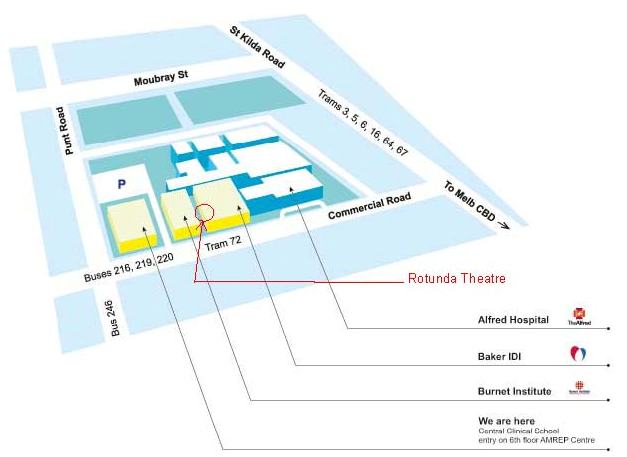
Prof O'Hehir will be speaking at the Central Clinical School's Translational Research Symposium Wednesday, 30 September 2015, on the topic of " InSPIREd Therapy for Allergies (Synthetic Peptide Immuno-Regulator Epitopes)"

All welcome, see details: